AI has been getting all up in our search results for a while now, with dubious results. While Google's AI Overviews feature had a rocky reception—what with it and all—it's not the only search engine that's been experimenting with a good dose of AI on its search pages.
Microsoft introduced LLM-powered chat answers to Bing early last year, Yono all app and now it's started experimenting with a for a small percentage of user queries (via ). Some users searching for the query , for example, are now greeted with a page that not only puts an Yono all app AI box front and center, but adds sourcing information for the AI result underneath, squeezing the more traditional search results list off to the side.
Being based in the UK, I had to engage a US-based VPN to trigger the page, as it appears to be geo-dependent at the time of writing. This is a test page, after all, but it's more than a little disconcerting to see traditional search results relegated to a sliver of info on the side of the page to make room for a sizable AI boxout.
The new design devotes a lot of page elements to citing its sources, with clickable boxes proving that it grabbed its info from reputable sites and entries underneath linking to them more directly.
Still, the main list of results you were actually likely looking for is pushed off into a side frame—with only two to three lines of text under each giving a brief description of the data it referenced from your search.
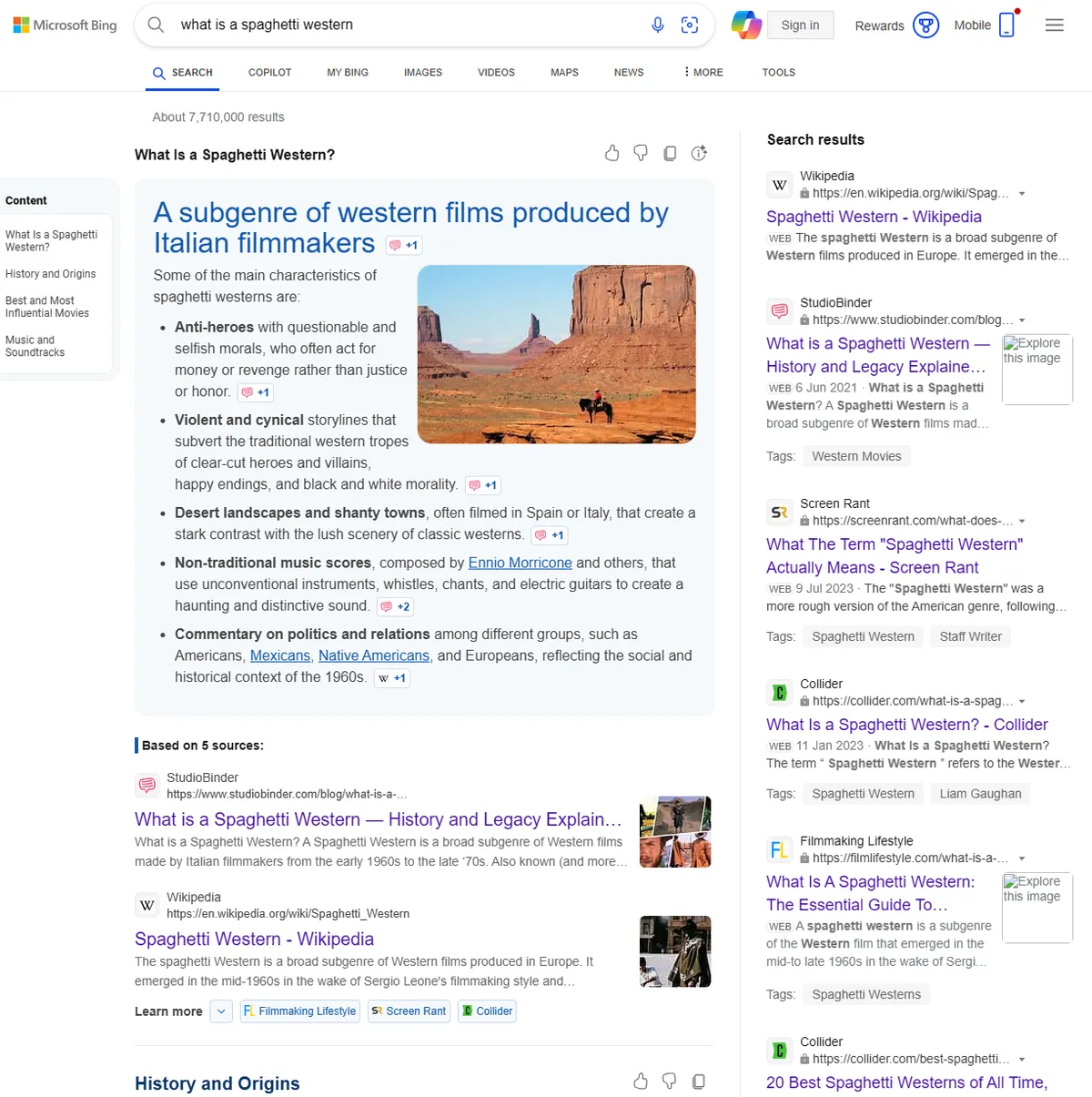
Aside from the AI domination, the page itself is visually messy in a way that seems to distract the eye, rather than draw attention to the thing you were actually there to discover in the first place—the relatively simple answer to , and perhaps some examples of highlights of the genre.
Microsoft says the new page combines the foundation of Bing's traditional search results with "the power of large and small language models". While the attempts here to clarify the veracity of the information presented are admirable, there's still a lot of info getting in the way of traditional—and potentially more useful—results.
That being said, doesn't seem to have caused much long-term damage to the company's reputation beyond the initial backlash. And it's likely that Microsoft are keen to play catch up to whatever features Google Search integrates, even if they're not always received particularly well.

: We dive into the lingo of AI and what the terms actually mean.
MS says that it's "continuing to look closely at how generative search impacts traffic to publishers", which hopefully suggests it might have more consideration than towards sites that focus on producing, y'know, human-created content and stuff.
If you do happen to stumble onto one of these AI-focussed Bing pages, Microsoft is encouraging users to let it know what they think by clicking the thumbs up and thumbs down buttons at the top of the page.
For now, these are just test pages, but it's a troubling look into the way search might look across the web in future.